
—Translated from ʿIrfān al-Maḥabbat: Sharḥ Faīḍān al-Maḥabbat by Muftī Muḥammad Amjad
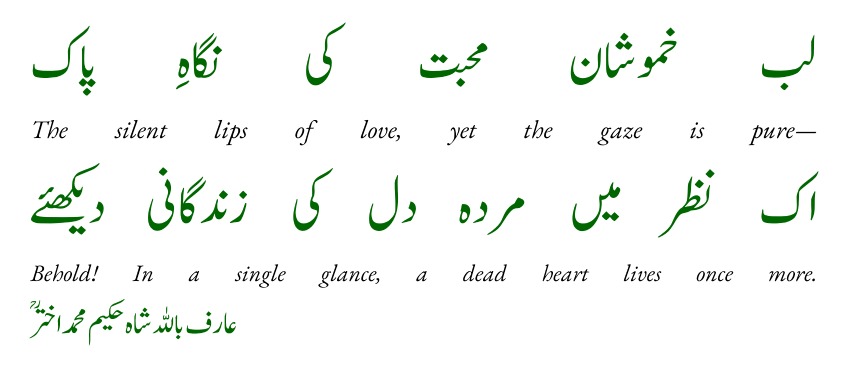
The silent lips of love, yet the gaze is pure—
Behold! In a single glance, a dead heart lives once more.
Those who are the ahl al-dil—the people of heart, the friends of Allah—bring benefit even through mere presence. Simply sitting in their company is never devoid of gain. Even when they remain silent, a single glance from them can overturn the states of hearts and breathe life into the spiritually dead.
Mullā ʿAlī al-Qārī ʳʰ, while discussing the ḥadīth “al-ʿaynu ḥaqq” (the evil eye is real), remarked that if the influence of the evil eye is an established truth, then why should the loving gaze of the ahl Allāh (the saints of Allah) not be real as well? If the evil eye can alter one’s temperament and disposition, why can the gaze of an ʿārif, a saint perfected in proximity to Allah, not transform hearts? As Mullā ʿAlī al-Qārī ʳʰ explains:
فَإِنَّهُ مِنْ حَيْثُ التَّأْثِيرِ الْأَكْسِيرِ يَجْعَلُ الْكَافِرَ مُؤْمِنًا وَالْفَاسِقَ صَالِحًا وَالْجَاهِلَ عَالِمًا وَالْكَلْبَ إِنْسَانًا [1]
(Mirqāt al-Maṣābīḥ, Kitāb al-Ṭibb wa-r-Ruqā, 8/325, al-Maktabah at-Tijāriyyah, Makkah al-Mukarramah)
“That gaze, by the effect of its spiritual elixir, can turn a disbeliever into a believer, a sinner into a righteous man, an ignorant person into a learned one, and even a beast into a human being.”
In another narration, this saying is attributed to Sayidunā Abū Bakr aṣ-Ṣiddīq ʳᵃ:
النَّظَرُ إِلَيْكَ وَالْجُلُوسُ بَيْنَ يَدَيْكَ وَإِنْفَاقُ مَالِي عَلَيْكَ
“O Messenger of Allah ﷺ, three things are most beloved to me: to gaze upon you, to sit before you, and to spend my wealth upon you.”
Notice that Sayidunā Abū Bakr aṣ-Ṣiddīq ʳᵃ did not mention listening to your discourse or sermon. From this we may understand how precious it is merely to sit in the blessed company of the Messenger ﷺ or of his inheritors—the scholars of religion.
Once, I myself experienced something similar. A few companions and I travelled to Delhi to visit Shāh Hardoī ʳʰ. Someone asked us, “What brings you to Delhi?” We replied, “We have come for his visitation.” The man objected, “If there was no sermon or lecture, what benefit is there in mere visitation?” I responded, “The visitation of the friends of Allah is never devoid of benefit. Their pure gaze alone transforms hearts, even if their tongues remain silent.”
As proof, I mentioned the narration wherein the Messenger of Allah ﷺ described this very quality of the friends of Allah:
إِذَا رُؤُوا ذُكِرَ اللَّهُ
“When they are seen, Allah is remembered.”
(Tafsīr Rūḥ al-Maʿānī, under Sūrat Yūnus, verse 3)
That is to say, when such blessed souls are visited, the heart is stirred with remembrance of Allah, and a sense of detachment and disinterest in the world arises. Is this not itself a great benefit? In the end, that man fell silent. Hence, the Shaykh remarked: though the lips of the lovers of Allah remain silent, through the power of their gaze, countless dead hearts are revived.
ʿIrfān al-Maḥabbat: Sharḥ Faīḍān al-Maḥabbat, p. 324
—
[1] Mirqāt al-Mafātīḥ Sharḥ Mishkāt al-Maṣābīḥ (7/2883) #4560:
وَقِيلَ: إِنَّمَا يَحْصُلُ ذَلِكَ مِنْ سُمٍّ يَصِلُ مِنْ عَيْنِ الْعَائِنِ فِي الْهَوَاءِ إِلَى بَدَنِ الْمَعْيُونِ، وَنَظِيرُ ذَلِكَ أَنَّ الْحَائِضَ تَضَعُ يَدَهَا فِي إِنَاءِ اللَّبَنِ فَيَفْسَدُ، وَلَوْ وَضَعَتْهَا بَعْدَ طُهْرِهَا لَمْ يَفْسَدْ. قُلْتُ: وَضِدُّ هَذَا الْعَيْنُ نَظَرُ الْعَارِفِينَ الْوَاصِلِينَ إِلَى مَرْتَبَةِ الرَّافِعِينَ مِنَ الْبَيْنِ حِجَابَ الْعَيْنِ، فَإِنَّهُ مِنْ حَيْثُ التَّأْثِيرِ الْإِكْسِيرُ يَجْعَلُ الْكَافِرَ مُؤْمِنًا، وَالْفَاسِقَ صَالِحًا، وَالْجَاهِلَ عَالِمًا، وَالْكَلْبَ إِنْسَانًا، وَهَذَا كُلُّهُ لِأَنَّهُمْ مَنْظُرُونَ بِنَظَرِ الْجَمَالِ وَالْأَغْيَارِ تَحْتَ أَسْتَارِ نَظَرِ الْجَلَالِ، وَمَا أَحْسَنَ مَنْ قَالَ مِنْ أَرْبَابِ الْحَالِ: لَوْ كَانَ لِإِبْلِيسَ سَعَادَةٌ أَزَلِيَّةٌ دُونَ الشَّقَاوَةِ الْأَبَدِيَّةِ لَمَا قَالَ: أَنْظِرْنِي، بَلْ قَالَ: أَنْظِرْ إِلَيَّ أَوْ أَرِنِي أَنْظُرُ إِلَيْكَ، لَكِنْ كُلُّهُ بِقَضَاءٍ وَقَدَرٍ، تَحَيَّرَ فِيهِ عُقُولُ أَرْبَابِ الْفُحُولِ وَتَطَمْئِنُ قُلُوبُهُمْ بِقَوْلِهِ سُبْحَانَهُ: {لَا يُسْأَلُ عَمَّا يَفْعَلُ وَهُمْ يُسْأَلُونَ} [الأنبياء: 23] ، وَإِنَّمَا طَارَ عَقْلِي فِيمَا ذَكَرْتُ مِنْ نَقْلِي لِأَنَّهُمْ أَوْلَادُ الطَّيَّارِ أَخِي الْكَّرَّارِ مِنْ أَهْلِ بَيْتِ الْأَسْرَارِ.
The opposite of that (the evil eye) is the gaze of the ʿārifīn—those who know Allah—and the wāṣilīn—those who have reached the rank of the exalted ones who have lifted the veil from before their eyes. Their gaze, in its effect, is an elixir: it can transform a disbeliever into a believer, a sinner into a righteous man, an ignorant person into a learned one, and even a beast into a human being.
All of this is because they gaze through the vision of beauty (naẓar al-jamāl), while others are veiled beneath the coverings of the vision of majesty (naẓar al-jalāl). How excellent are the words of one among the masters of spiritual states who said:
“Had Iblīs possessed any share of eternal felicity instead of everlasting wretchedness, he would not have said: ‘Grant me respite’ (anẓirnī)—rather he would have said: ‘Look upon me’ (anẓur ilayya) or ‘Show Yourself to me that I may look upon You’ (arinī anẓur ilayka).”
But all things occur by divine decree and destiny—a matter that has bewildered the intellects of even the greatest minds, though their hearts find rest in His saying, exalted is He:
“He is not questioned about what He does, but they will be questioned.”
(Sūrat al-Anbiyāʾ 21:23)
Indeed, my intellect soared in wonder as I transmitted these meanings—for they are the offspring of the flyer (al-ṭayyār), my brother the valiant (al-karrār), from the people of the Household of Secrets (Ahl Bayt al-Asrār).
Disclaimer:
The above article has been prepared/translated under the full oversight and approval of the respected Muftī Ṣāḥib. The author may have utilized AI assistance for the purposes of language refinement, structural clarity, and improved coherence in English. However, the religious content and conclusions reflect the Muftī’s authoritative guidance.