
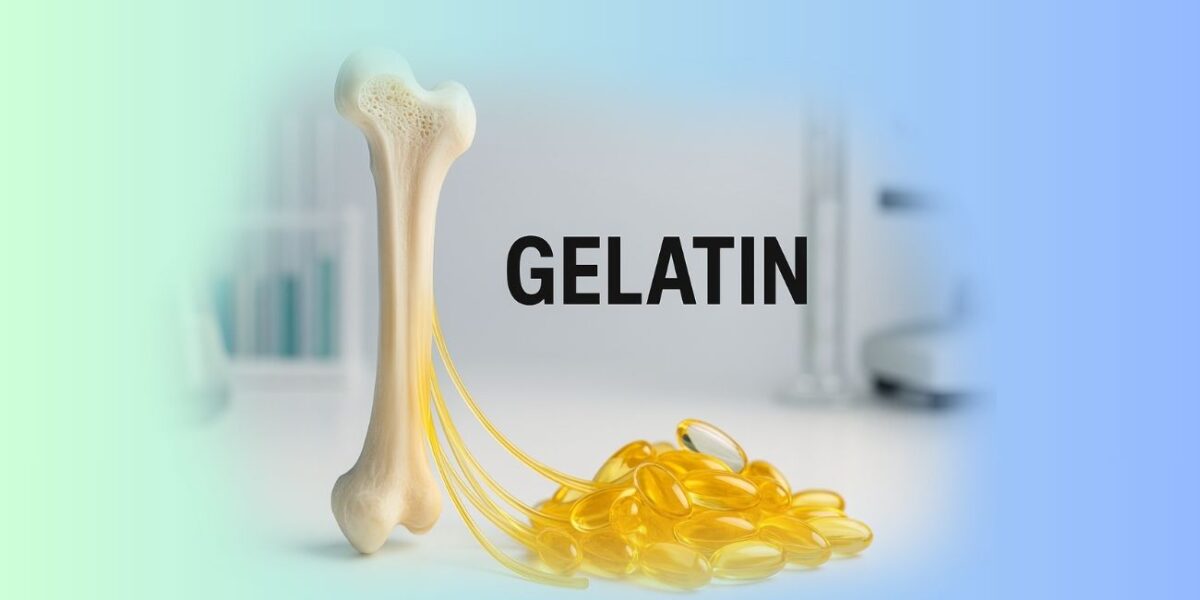
Mufti Yūsuf ʿAbd al-Razzāq
Chief Executive, SANHA Pakistan
(Ḥalāl Industry se mutaʿalliq taḥqīqī maqālāt pg. 183-190)
A few years ago, during a ḥalāl conference held in Turkey, I had the opportunity to discuss the Sharʿī ruling of gelatin with some scholars. Certain individuals were of the view that gelatin, if obtained from a ḥalāl animal, is ḥalāl, and if obtained from a ḥarām animal, it is ḥarām. Others, however, opined that since the substance of the ḥarām source undergoes transformation (istiḥālah) during the manufacturing process, the condition of the animal being ḥalāl or slaughtered in a ḥalāl manner is no longer necessary; hence, its use is Sharʿan permissible.
In the various fatāwā that I came across, one point was common: if transformation (tabdīl māhiyyah) has indeed taken place, then the use of such gelatin is permissible; otherwise, gelatin derived from ḥalāl sources will be permissible, while that derived from ḥarām sources will remain impermissible.
I consider myself fortunate that Allāh Taʿālā blessed me with the knowledge of His Dīn and, at the same time, connected me with the field concerning ḥalāl and ḥarām. Considering this a dual responsibility, I decided to conduct research on this subject. Upon my return from travel, I requested a company engaged in the production of gelatin to assist me in this matter so that the ummah might greatly benefit from it. May Allāh Taʿālā reward them abundantly, for they graciously accepted my request. During one of my visits to Lahore, they took me along to their factory.
First, I was introduced to the head of their Research and Development Department, who verbally explained the entire process to me. The discussion contained many technical details, which were somewhat difficult to comprehend instantly for someone hearing them for the first time. Nevertheless, when the intention is sincere, Allāh Taʿālā eases the path. From his explanation, I was able to understand approximately fifty percent of the process. To grasp the remaining, I asked him a straightforward question: “In simple terms, would you say that through this entire process the substance undergoes transformation (tabdīl māhiyyah) or not?” The answer was, “No. In fact, we have only separated a specific component from the original substance with utmost care.”
After that, two of us—this writer and Muftī Aḥsan Ẓafar Ṣāḥib—set out to tour the plant. We observed each stage of the process from beginning to end, step by step, posing questions and collecting their responses throughout.
May Allāh Rabb al-ʿIzzah accept this humble effort and make it a means of guidance for the ummah.
(Muftī) Yūsuf ʿAbd al-Razzāq
Chief Executive, SANHA Pakistan
Friday, 21 October 2016
1438, Friday
Introduction
Gelatin is the name of a protein derived from collagen, which in turn is obtained from the bones and hides of living creatures. It is also called a gelling agent because its function is to bind and hold together the bones and skin. In appearance, it is a jelly-like solid substance. One of its sources is also fish.
In English, it is written in two ways: Gelatin and Gelatine, both meaning “a solidified substance.”
In Urdu, it has been written as Jeelatin, Jilatin, and Jeeliten; however, according to our research, the most accurate form is Jeelatin (جیلاٹین).
Note: Pectin is derived from fruits and serves as a substitute for gelatin; hence, calling it gelatin would be incorrect.
Uses of Gelatin:
As mentioned in the definition above, gelatin is a thick substance obtained from bone or hide, and its primary use is to create thickness or viscosity in food items. For example, in our society, pāyah (trotter soup) is considered more delicious when it is thick. This thickness develops as a result of slow cooking over gentle heat for a long period—meaning that the longer the bones are cooked, the more gelatin content is released into the broth, giving it a thick consistency.
Gelatin as a Clarification Agent:
It is used as a filtering agent to clarify fruit juices, such as apple juice.
Gelatin as a Stabilizer:
It is added to packaged yogurt to prevent it from releasing water.
Common Products Containing Gelatin:
Gelatin is abundantly used in the following products:
Marshmallows, jellies, chocolates, toffees, chewing gum, cakes, ice creams, nihārī masālah (spice mix), packaged yogurt, capsules, and medicines designed to strengthen bones.
The above passage presents a basic introduction and brief outline. Now we shall move to our main discussion.
Before understanding the process of gelatin production, it is necessary to first understand the composition of bone itself, for that is the key point which can greatly simplify the issue.
Constituent Components of Bone:
In short, bone is composed of several elements which experts classify into two types:
- Organic
- Inorganic
In the organic portion, the main component is collagen, which is to be extracted from the bone.
From the inorganic portion, calcium and phosphorus are obtained, which are used in the preparation of animal feed.
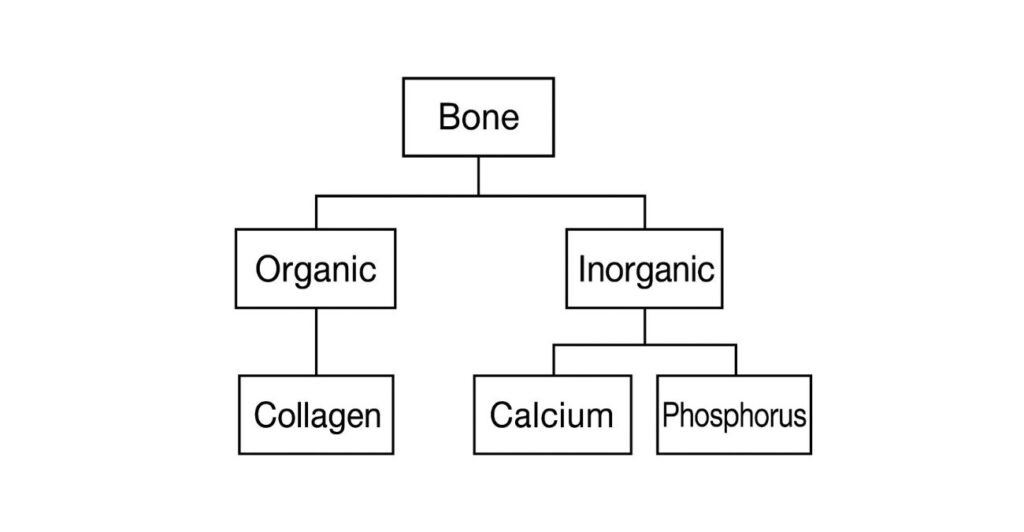
Note: The function of collagen is to bind all the constituent elements of the bone together—just like the binding substance in cement which holds its components and provides strength.
Process of Gelatin Production
In the process of manufacturing gelatin, all effort and expertise are directed toward a single objective: to separate every component of the bone while ensuring that the substance binding those components—collagen—remains intact. This is, in fact, a difficult task, similar to extracting a single component from a cement block in such a way that the rest of the ingredients separate but the binding substance remains unharmed.
The sequence of gelatin production is as follows:
- First, large bones are cut into pieces approximately two inches in size.
- They are then placed in a rotating sieve to remove dirt and debris.
- Thereafter, the bones are transferred into a large drum of water, where they are cleaned for one and a. half to two days using water mixed with caustic soda (sodium hydroxide).
b. The function of caustic soda is merely to remove all types of grease or fat present on the bones so that clean and transparent bones are obtained for the next stage. - The bones are then soaked, as needed, for four to five days in water mixed with hydrochloric acid (HCl), commonly known as muriatic acid.
Through the addition of hydrochloric acid and cold water, bacteria and inorganic substances such as calcium and phosphorus are removed from the bones. In this stage, the inorganic components—namely calcium and phosphorus—are separated from the bone. - The bones are then placed in lime-treated water tanks for approximately seventy days, during which the remaining impurities are separated from the bone, and pure collagen appears in a solidified form. During this process, the water is changed periodically.
At this point, phosphoric acid is reintroduced to balance the acidity level of the bone residue, which had risen up to a pH of thirteen due to the lime. - The organic substance, collagen, is then transferred to specific vats, where hot water is poured over it repeatedly so that it dissolves thoroughly in water without burning or damage. Consequently, the solidified collagen completely dissolves and takes the form of a solution—similar to a broth (yakhni).
- This solution is pumped into another tank. At this stage, the mixture contains about 90% water and 10% dissolved collagen. The water is partially evaporated through the process of evaporation, reducing the moisture to about 40%.
- This broth is filtered again so that any remaining bone particles are completely removed, while evaporation continues to reduce water content further. As water decreases, the broth becomes increasingly thick and concentrated.
- The thick solution is then passed through another filter and pumped out in the form of thin strands (noodles). Before it exits the sieve, it passes through a cooling unit (chiller), which helps semi-solidify the gelatin.
These strands then travel along a moving belt for approximately twenty-five minutes, during which the moisture (water) continues to be dried out. The filter used in this stage is made of cotton. - Once fully dried, the gelatin strands are ground to the required size and packed into bags in powdered form.
Note: Collagen and gelatin are two different forms of the same original substance. The initial material extracted from the bone is collagen. When this substance is dissolved in water, it continues to be referred to as collagen, containing a considerable amount of water. When, at the final stage, it is filtered and formed into strands, it is then called gelatin. The difference is similar to that between fat and oil (after melting), or between a raw egg and a boiled egg—two forms of the same substance with different appearances.
Summary of the Research
After hearing and observing all the details, I reached the conclusion that gelatin is an essential component of bone that has merely been separated from it with great care. In technical terminology, this process is called extraction. This is precisely the same as extracting juice from sugarcane, then drying that juice into gur (jaggery), and thereafter isolating glucose from the gur to produce refined sugar. Hence, there is no question of transformation (tabdīl māhiyyah) occurring here. However, if someone claims that sugar produced from sugarcane undergoes transformation (which it certainly does not), that would be a different discussion altogether.
Therefore, when gelatin is obtained from an animal, its permissibility depends upon the animal being ḥalāl and slaughtered according to Sharʿī procedure. Otherwise, such gelatin cannot be considered ḥalāl.
Wa-Allāhu Aʿlam biṣ-Ṣawāb
Yūsuf ʿAbd al-Razzāq
Chief Executive, SANHA Pakistan
Further Discussion on the topic from Darul Iftaa Canada (AskHalal)
Do Bones Possess Life (ḥayāh) in the Fiqhī Sense?
According to the Ḥanafī madhhab, ʿaẓm (bone) does not possess ḥayāh (life) in itself. This is established by explicit mention in al-Nutaf fī al-Fatāwā of as-Sughdi rh, which enumerates fifteen things from a dead animal that remain permissible, including “al-ʿaẓm” (bone), alongside “ash-shaʿr, al-ṣūf, al-ʿaṣab, al-qarn, al-ẓufr”, etc., while excluding pig as najis al-ʿayn.[1]
This text proves two things:
- Bones are not affected by death (i.e., not impure by the death of the animal).
- They are not considered to possess life in the juristic sense.
Thus, the uṣūl basis here is: “That which has no life does not become impure upon death.” [2]
Hence, the bone remains ṭāhir, even if taken from a dead body, except in the case of the pig, which is najis al-ʿayn.
Implication for Gelatin Extracted from a Maʾkūl al-Laḥm Animal
If the source is a maʾkūl al-laḥm (ḥalāl species) animal:
- The bone itself is ṭāhir even without dhakāh, since it lacks life.
- Therefore, the gelatin extracted from such bones, being merely an isolation (istikhraj) of an existing ṭāhir substance, remains ḥalāl-suitable (ḥalāl sāliḥ).
This is fully consistent with al-Nutaf and with the principle from Taḥfat al-Fuquhāʾ that dhakāh purifies only that which possessed life:
“As for dhakāh (slaughter), we say: When an animal is slaughtered — if it is one whose flesh is lawful to eat (maʾkūl al-laḥm) — then all its parts become pure through dhakāh, except the blood.
And if it is an animal whose flesh is not lawful to eat (ghayr maʾkūl al-laḥm), then whatever becomes pure from its dead form (maytah) — such as hair and similar parts — becomes pure through slaughter as well.
And whatever does not become pure from its dead form — such as flesh, fat, and skin — the question arises whether it becomes pure through dhakāh or not.
According to ash-Shāfiʿī rh, it does not become pure.
As for us, al-Karkhī ʳʰ has mentioned that every animal whose hide is purified by tanning is also purified by slaughter, and this indicates that all of its parts become pure.” [3]
Since bone has no life, it requires no slaughter for ṭahārah.
What About Non-Maʾkūl al-Laḥm Animals?
This is the more subtle question. If bone from a non-maʾkūl al-laḥm species (e.g., donkey, cat, elephant) also lacks life, does it remain ṭāhir and hence usable?
The Ḥanafī jurists treat this under two lenses:
(a) Regarding Ṭahārah:
Yes — its bone remains ṭāhir, because, again, death does not affect it. This is consistent with al-Nutaf, where bones are mentioned among the permissible remnants of dead animals, without restricting to maʾkūl species.
Hence, ṭahārah is affirmed.
(b) Regarding Istiʿmāl (Use / Istihlāl):
However, ibāḥah of use depends not only on ṭahārah but on istihlāl (permissibility of benefit).
al-Baḥr ar-Rāʾiq (6/76) gives a clear distinction:
“As for the statement, “It is not permissible to sell carrion or blood,” —
this is because of the absence of māliyah (monetary value), which is a fundamental pillar of sale; for neither of these is regarded as māl (property of value) by anyone. Hence, such a transaction falls under the category of bāṭil (void).
The author rh employed the term fāsid in this chapter in its broader sense, and thus expressed the ruling with the phrase ʿadam al-jawāz (impermissibility), which encompasses both bāṭil and fāsid.
In al-Qāmūs, it is stated:
al-maytah is that which has not been reached by dhakāh (slaughter), and when read in the genitive form, it refers to the type. ” [4]
When something is from a non-maʾkūl animal, even if purified by tanning, it may be ṭāhir but not mubāḥ li-l-akl (permissible for consumption), because tanning is not stronger than slaughter, and slaughter does not make it permissible.
By analogy, gelatin extracted from the bones of non-maʾkūl animals may be pure (ṭāhir) but not permissible for ingestion, because dhakāh (slaughter) — which is the means to istihlāl al-akl — does not apply to them in a way that makes them maʾkūl.
Thus, consumption would remain ghayr mubāḥ (impermissible), even if contact or external use may be allowed.
Exception: Pig (Khinzīr)
Here the rule of najāsah al-ʿayn applies. As as-Sughdi notes: “Except the pig, for no part of its carcass may be benefited from.”
The pig is excluded from the general rule because every part of its body is inherently impure — najis al-ʿayn — and istiḥālah cannot purify it according to the muʿtamad Ḥanafī view (though there are marginal ikhtilāfāt regarding vinegar transformation).
Hence, gelatin derived from pigs remains ḥarām and najis, regardless of process.
AskHalal Standard — Resolution on Bone-Derived Gelatin:
Gelatin extracted from bone is a process of istikhraj (extraction), not istiḥālah (chemical transformation). According to Ḥanafī principles, bone does not possess life and therefore does not become impure upon the animal’s death.
- Consequently, gelatin derived from the bones of maʾkūl al-laḥm (ḥalāl) animals — whether slaughtered or not — is ḥalāl-suitable, as the source matter remains ṭāhir.
- However, gelatin from non-maʾkūl al-laḥm animals, though ṭāhir, is not permissible for consumption, but may be used for external usage (as long as there is no fear of consumption).
- Gelatin derived from pigs (khinzīr), being najis al-ʿayn, is strictly ḥarām.
Checked and Approved by:
Muftī Faisal bin Abdul Hamīd al-Mahmūdī
Darul Iftaa Canada (www.fatwa.ca)
[1] النتف في الفتاوى للسغدي – دار الفرقان (1/ 233)
قَالَ وَيحل من الْميتَة خَمْسَة عشر شَيْئا
الا الْخِنْزِير فانه لَا ينْتَفع بِشَيْء من جثته سوى بعض شعره فانه قد رخص فِيهِ للاسفاكة
1 – الصُّوف 2 والوبر 3 وَالشعر 4 والقرن 5 وَالسّن 6 وَالظفر 7 والعظم 8 والظلف فِي قَول الْفُقَهَاء وابي عبد الله وَفِي قَول الشَّافِعِي لَا يحل والعاشر الْجلد اذا دبغ فقد طهر فِي قَول الْفُقَهَاء وابي عبد الله وَفِي قَول مَالك وابي ثَوْر لَا يحل الْجلد وان دبغ وَالْحَادِي عشر الْبَيْضَة وَالثَّانِي عشر اللَّبن حَلَال فِي قَول ابي حنيفَة وابي عبد الله لَان الْمَوْت لَا يلْحقهُ وَفِي قَول الشَّافِعِي كِلَاهُمَا مكروهان وَفِي قَول ابي يُوسُف وَمُحَمّد وَالشَّيْخ السِّتَّة مُبَاحَة وَاللَّبن مَكْرُوه وَالثَّالِث عشر العصب فِي قَول اكثر الْفُقَهَاء وَفِي قَول الشَّيْخ هُوَ مَحْظُور عَنهُ وَالرَّابِع عشر الْحَافِر وَالْخَامِس عشر المنقار وَقد قَالَ بعض الْفُقَهَاء ان المصران والمثانة والكرش اذا دبغت فقد طهرت
واما جُلُود السبَاع اذا ذبحت فقد حلت فِي قَول ابي حنيفَة واصحابه وان لم تدبغ واما فِي قَول ابي عبد الله وَالشَّافِعِيّ فانه لَا تحل الا بالدباغ
[2] مراقي الفلاح شرح نور الإيضاح (ص: 70)
وكل شيء لا يسري فيه الدم لا ينجس بالموت كالشعر والريش المجزوز والقرن والحافر والعظم
[3] تحفة الفقهاء – دار الكتب العلمية (1/ 72)
أما الذَّكَاة فَنَقُول الْحَيَوَان إِذا ذبح إِن كَانَ مَأْكُول اللَّحْم يطهر بِجَمِيعِ أَجْزَائِهِ إِلَّا الدَّم
وَإِن كَانَ غير مَأْكُول اللَّحْم فَمَا يطهر من الْميتَة نَحْو الشّعْر وَأَمْثَاله يطهر مِنْهُ وَمَا لَا يطهر من الْميتَة نَحْو اللَّحْم والشحم وَالْجَلد وَهل يطهر بالذكاة أم لَا على قَول الشَّافِعِي لَا يطهر
وَأما عندنَا فقد ذكر الكرخيوق ال كل حَيَوَان يطهر جلده بالدباغ يطهر جلده بالذكاة فَهَذَا يدل على أَن جَمِيع أَجْزَائِهِ تطهر
[4] البحر الرائق شرح كنز الدقائق ومنحة الخالق وتكملة الطوري – دار الكتاب الإسلامي (6/ 76)
(قَوْلُهُ لَمْ يَجُزْ بَيْعُ الْمَيْتَةِ وَالدَّمِ) لِانْعِدَامِ الْمَالِيَّةِ الَّتِي هِيَ رُكْنُ الْبَيْعِ فَإِنَّهُمَا لَا يُعَدَّانِ مَالًا عِنْدَ أَحَدٍ، وَهُوَ مِنْ قِسْمِ الْبَاطِلِ وَالْمُؤَلِّفُ – رَحِمَهُ اللَّهُ تَعَالَى – لَمَّا اسْتَعْمَلَ الْفَاسِدَ فِي الْبَابِ لِلْأَعَمِّ عَبَّرَ بِعَدَمِ الْجَوَازِ الشَّامِلِ لِلْبَاطِلِ وَالْفَاسِدِ، وَفِي الْقَامُوسِ الْمَيْتَةُ مَا لَمْ تَلْحَقْهُ ذَكَاةٌ وَبِالْكَسْرِ لِلنَّوْعِ اهـ.