
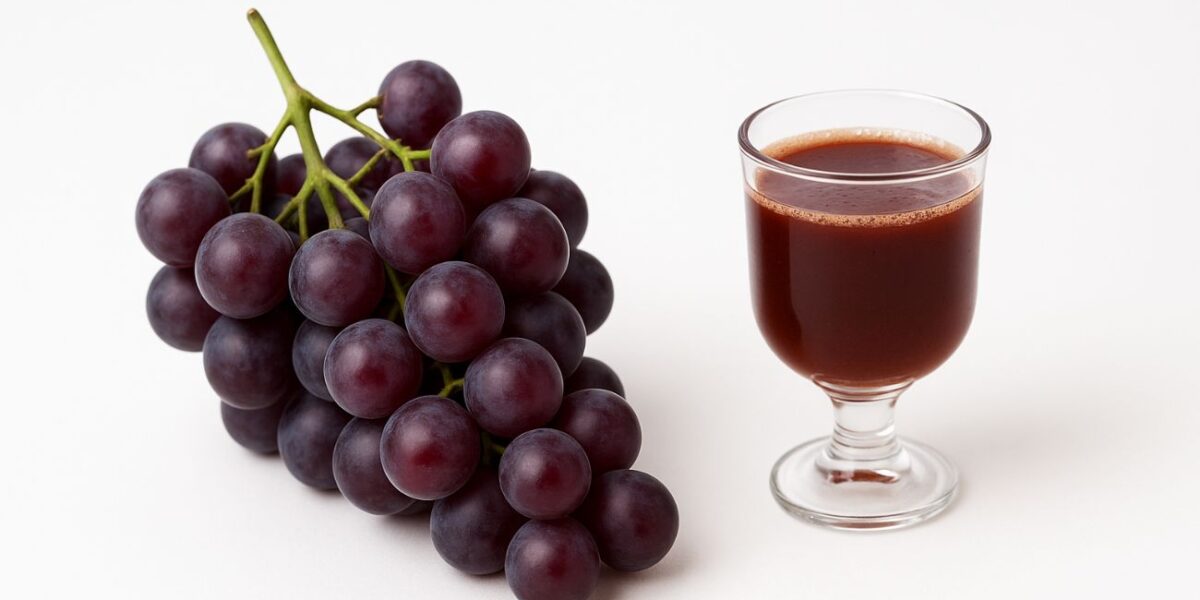
When reading the ingredients of certain foods or condiments, one may come across the term grape must. For those concerned with Halal consumption, it is natural to ask: what exactly is grape must, how is it used in the food industry, and is it suitable for Muslims to consume? To answer, we must first explore its nature and then consider how it appears in modern commercial practice.
What is Grape Must?
In winemaking terminology, must refers to the freshly crushed juice of grapes, which still contains the skins, seeds, and stems. This raw material is naturally rich in sugars (glucose and fructose), organic acids (tartaric and malic), and polyphenols. Because of its high sugar content, grape must is extremely prone to fermentation: the yeasts present on grape skins readily begin converting sugars into ethanol. For this reason, must is the essential starting point in the production of wine.
When described as organic grape must, the term highlights that the grapes were cultivated according to organic farming standards, avoiding synthetic pesticides, herbicides, or chemical fertilizers. This does not change the inherent chemical nature of grape must, but it aligns with consumer demand for more natural and environmentally friendly products.
Uses of Grape Must in the Food Industry
Although winemaking is the traditional and primary use, grape must has also found a place in the wider food industry. Some common applications include:
- Natural Sweetener
Concentrated grape must is used as an alternative to refined sugar in baked goods, confectionery, baby foods, and breakfast cereals. Because it comes directly from fruit, it appeals to health-conscious and organic-minded consumers. - Flavor and Complexity
Grape must provides a deep, fruity sweetness balanced with mild acidity. Mediterranean cuisine makes use of saba—a reduced syrup of grape must—served over desserts, cheeses, or roasted vegetables. - Balsamic Vinegar Production
Perhaps its most famous culinary role outside of wine is as the foundation for balsamic vinegar. Cooked grape must is aged, sometimes for years, until it transforms into the thick, tangy condiment known worldwide. - Color and Texture
Because grape must retains natural pigments, it contributes richness of color in jams, sauces, and confectionery. Its sugars and acids also give thickness and body when reduced in cooking. - Substrate for Fermentation
Beyond wine, grape must can be allowed to ferment into other products. However, this fermentation pathway is precisely where Halal concerns arise.
Halal Considerations
From a Muslim consumer’s perspective, the question is not about the grape itself—grapes are clearly permissible—but whether the grape must listed in a food product has undergone fermentation. If fermentation takes place, it can result in (khamr) alcohol, which would render the product impermissible. On the other hand, if grape must is pasteurized, concentrated, or otherwise stabilized so that fermentation cannot proceed, then it remains a simple fruit derivative and is Halal.
Therefore, grape must can be divided into two broad categories:
- Halal-suitable: Concentrated grape must used as a natural sweetener, syrup, or in vinegar production.
- Not Halal-suitable: Grape must actively fermenting into wine or used in alcoholic beverages.
Current Commercial Practice
It is important to ask: in today’s food industry, how is grape must actually used?
In the wine industry, must is always fermented into wine. However, this sector is separate from mainstream packaged foods. In the consumer food industry, grape must is overwhelmingly used in unfermented or stabilized form. Whether it is concentrated for sweetening, reduced into syrups, or cooked down to make balsamic vinegar, the commercial goal is sweetness, richness, and flavor—not alcohol production.
This distinction matters. On an ingredient label for a soft drink, baby food, or condiment, “grape must” almost always refers to the concentrated, unfermented version. The fermented usage is largely restricted to winemaking and alcoholic beverages, which Muslims avoid entirely.
Default Position for Halal Consumers
Given this reality, the most reasonable and balanced approach is to treat grape must in food products as Halal suitable by default. Since the predominant industry practice is to use it in a non-fermented form, there is no need for suspicion. If evidence ever shows that a particular product has used fermented grape must or alcohol, then impermissibility would apply in that case alone.
This approach gives clarity and ease to consumers:
- Yes, you can accept grape must in packaged foods, sauces, and condiments.
- No, you cannot accept it in products tied to wine or alcoholic beverages.
Resolution
Grape Must in food products as an ingredients will be considered as non-fermented ingredient, unless there is an indication or evidence that a fermented grape must or alcoholic form has been used. Hence, grape must is Halal suitable.
Grape Must in wine or related product will always be considered Haram, even in small contents.
Disclaimer:
The above article has been prepared under the full oversight and approval of the respected Muftī Ṣāḥib. The author may have utilized AI assistance for the purposes of language refinement, structural clarity, and improved coherence in English. However, the religious content and conclusions reflect the Muftī’s authoritative guidance.