

This judgment examines whether Sections 294-A and 294-B of Pakistan’s Penal Code conform to Sharīʿah, particularly regarding state-sanctioned lotteries. After defining qimār and distinguishing lawful prize schemes from gambling, the Court concludes that government lotteries are impermissible, and certain promotional schemes should only be prohibited when they involve inflated prices constituting qimār.
Read More
Belief in taqdīr — divine decree — is a cornerstone of faith, balancing Allah’s absolute will with human responsibility. This article explores its linguistic, theological, and philosophical dimensions, the errors of Jabriyyah and Muʿtazilah, and the profound wisdom behind good and evil, mercy and power, within divine creation.
Read More
This commentary explores the scholarly discussion on Rafʿ al-Yadayn—raising the hands during prayer. Drawing from Maẓāhir al-Ḥaqq Sharḥ Mishkāt al-Maṣābīḥ, it presents the differing views of the Ḥanafī and Shāfiʿī schools, the evidences of the Ṣaḥābah, and Imām Abū Ḥanīfah’s ʳʰ juristic reasoning behind limiting the gesture to the opening takbīr taḥrīmah.
Read More
In Islamic law, hunting is permissible when conducted with due Sharīʿah conditions. The tasmiyah must be recited before releasing the trained animal or firing the weapon. If the prey dies from that act, it is ḥalāl; if found alive with stable life, it must be slaughtered immediately to be lawful.
Read More
This study examines gelatin extracted from animal bone through the lens of Ḥanafī jurisprudence. It concludes that bone, lacking life, remains ṭāhir upon death; hence gelatin from ḥalāl animals is ḥalāl-suitable, from non-maʾkūl species is externally permissible, while pig-derived gelatin is intrinsically impure (najis al-ʿayn) and strictly ḥarām.
Read More
This analysis explores the Sharīʿah perspective on food products containing trace amounts of impermissible substances. It examines causes of prohibition—harm, impurity, intoxication, filth, and human sanctity—and outlines when minute proportions, transformation (istiḥālah), or necessity may allow permissibility without compromising Sharīʿah principles of purity, respect, and moderation.
Read More
The concept of fatwa occupies a central place in Islamic life, guiding Muslims in matters of worship, transactions, and daily conduct. Yet the role of issuing a fatwa is not open to every student of knowledge or well-spoken preacher; it is a responsibility entrusted only to those who have mastered the sciences of Sharīʿah, undergone rigorous training under senior scholars, and demonstrated both intellectual aptitude and moral integrity. The following write-up lays out who truly qualifies as a Mufti, the conditions for issuing fatwa, the grave warnings against speaking without knowledge, and the parallels that show why this discipline must be guarded with utmost care.
Read More
Allāh Almighty has commanded in the Qur’ān to safeguard amānah (trust) and has forbidden betrayal (khiyānah), describing it as a condemnable act. Those who betray trusts are not beloved to Allāh. In fact, in the ḥadīth, betrayal of trust is mentioned as a sign of hypocrisy, implying that treachery is not the trait of a […]
Read More
In the modern financial landscape, the stock market presents numerous opportunities for investors to build wealth. Among the more active strategies are short-term trading and day trading—both offering quick access to market gains through rapid buying and selling. While these strategies may be attractive to many, Muslim investors must also evaluate their compliance with Islamic […]
Read More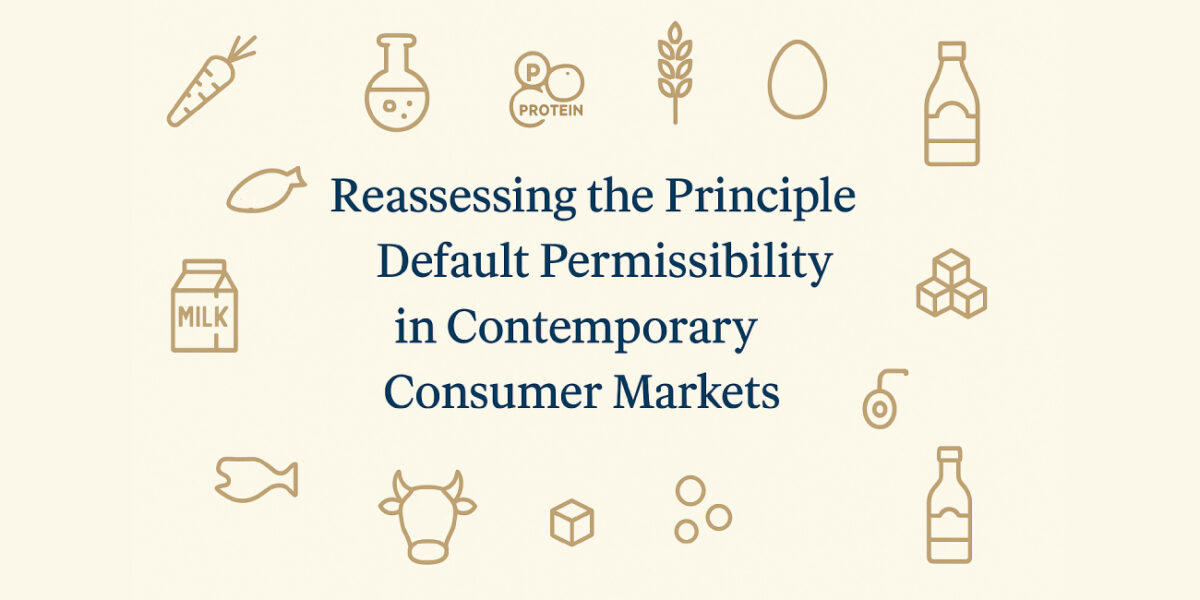
Question received: We observe that AskHalal frequently conducts extensive reviews of products and often classifies them as doubtful (mashbūh). Below, we present an excerpt from Mufti Taqi Usmani in which he discusses the principles of ḥalāl and ḥarām, emphasizing the default position of permissibility for all non-meat items. He also notes that excessive scrutiny is […]
Read More