
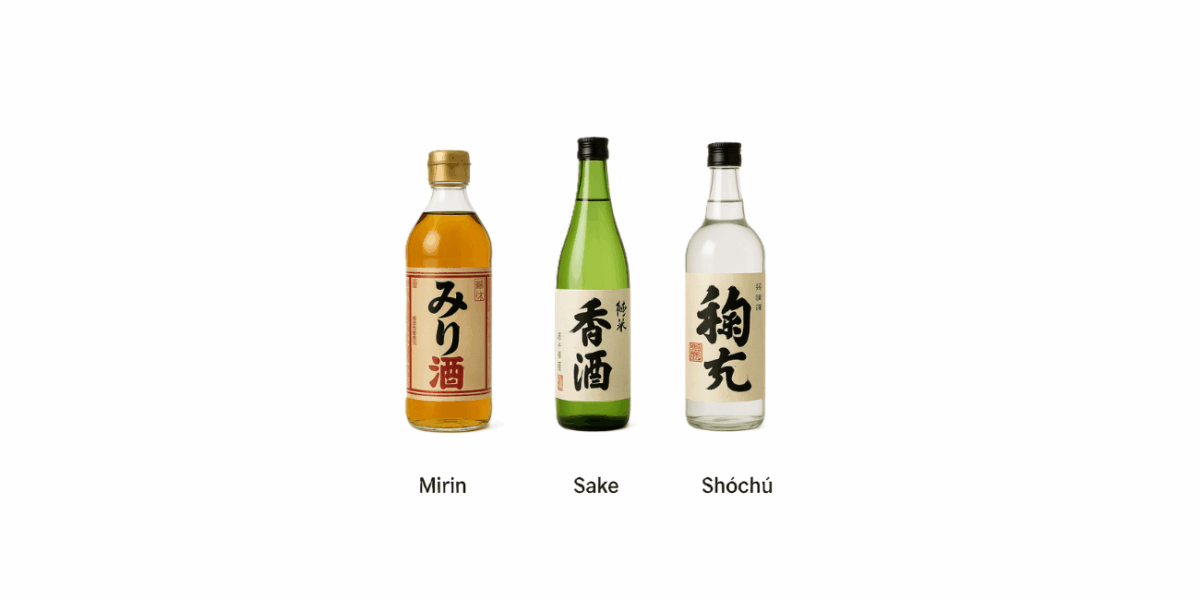
When evaluating Japanese alcoholic products under Islamic law, it is necessary to distinguish between their chemical nature, their origins, and how they are classified in the Hanafi school of jurisprudence. The three traditional Japanese alcohols most commonly encountered are mirin, sake, and shōchū.
Read More
Our actions rarely begin as actions. They start as flickers in the heart and mind, grow into plans, and finally harden into choices. The tradition maps this inner journey through five stages: ḥājis , khāṭir , ḥadīth al-nafs, hamm, and ʿazm. Understanding these stages helps us steer ourselves toward ṭāʿah (obedience) and away from maʿṣiyah […]
Read More
Non Khamr Alcohol (whether from distillation or fermentation) does not follow the same ruling according to hanafiya. This means that in smaller quantities like solvents and emulsifiers etc, they will not render the other items najis, and will not affect the hillah of the item.
Read More
What is Wheat Starch? Wheat starch is the purified carbohydrate fraction extracted from the wheat kernel. It consists mainly of amylose and amylopectin and is similar in function to corn starch, potato starch, or tapioca starch—just sourced from wheat. Industrial / Commercial Production Uses in foods include: Sharʿī / Halal Considerations Resolution (ilmHub’s Stance) Plain […]
Read More
What is Wheat Sow Culture and What is it Made From? Wheat sow culture — sometimes simply called a sourdough starter — is a fermented mixture made from wheat and water. When left at warm temperatures, naturally occurring yeasts and lactic acid bacteria grow in this mixture. The microbes break down the starches and proteins […]
Read More
taken from the notes on Sharḥ al-Mishkāt al-Maṣābīḥ : Ḥadīth Jibrīl One of the most profound frameworks through which the believer can understand his or her journey to Allah is the triad of Islām, Īmān, and Iḥsān. These three dimensions—outlined explicitly in the famous ḥadīth of Jibrīl—represent not merely stages but interconnected realities that shape […]
Read More
In the modern financial landscape, the stock market presents numerous opportunities for investors to build wealth. Among the more active strategies are short-term trading and day trading—both offering quick access to market gains through rapid buying and selling. While these strategies may be attractive to many, Muslim investors must also evaluate their compliance with Islamic […]
Read More
Question received: We observe that AskHalal frequently conducts extensive reviews of products and often classifies them as doubtful (mashbūh). Below, we present an excerpt from Mufti Taqi Usmani in which he discusses the principles of ḥalāl and ḥarām, emphasizing the default position of permissibility for all non-meat items. He also notes that excessive scrutiny is […]
Read More
Chocolate is loved globally for its rich flavor, comforting texture, and versatility in desserts, drinks, and snacks. But when diving into the world of chocolate, you may encounter some confusing terminology—especially terms like chocolate liquor and chocolate liqueur. While they sound similar, they are entirely different products with distinct ingredients, production processes, and uses. In […]
Read More
Key Concepts and Principles This study guide focuses on the Islamic legal principles governing the exchange of gold and silver (Ṣarf) and their application to modern currency notes, drawing from the provided excerpts. Understanding these principles is crucial for comprehending permissible and impermissible transactions in Islamic finance. 1. Ṣarf (صرف): Exchange of Gold and Silver […]
Read More