
transcribed with minor editing from a talk given by Mufti Taqī ʿUthmānī
In the name of Allāh, the Most Gracious, the Most Merciful.
Al-ḥamdu lillāhi Rabbil-ʿālamīn. Waṣ-ṣalātu wa-s-salāmu ʿalā sayyidinā Muḥammadin, nabiyyihi al-karīm, wa ʿalā ālihi wa aṣḥābihi ajmaʿīn.
My brothers and sisters — as-salāmu ʿalaykum wa raḥmatullāhi wa barakātuh.
It is my honour and pleasure to be in Wad-Dīn this evening for this conference — or rather, this blessed meeting — which combines ʿUlamāʾ and also medical professionals of this country. I was very happy to learn from Brother Dr. Nabīl Ṣāḥib that you people have begun to meet frequently and to discuss such issues. As he told me, these gatherings have been very useful and fruitful.
And today, you have organized this forum to discuss several subjects relating to medical science and medical ethics. May Allāh put barakah in these efforts you have initiated.
Bridging the Gap Between the ʿUlamāʾ and Professionals
When coming to this hall, Brother Dr. Nabīl Ṣāḥib let me hear some parts of the previous lectures delivered in this forum. Al-ḥamdu lillāh, all those lectures were both informative and scholarly. I do not intend to enter into any particular technical issue discussed earlier, but I wish to make some general points that all of us should keep in consideration.
It is unfortunate for our community that over the last two centuries, a vast gap has been created between those who possess the knowledge of Qurʾān, Sunnah, and Islamic jurisprudence (fiqh), and those educated in modern sciences — the professionals in various fields. There has grown a distance between the ʿUlamāʾ and the non-ʿUlamāʾ.
This gap did not exist in earlier centuries. In the early generations, the person who studied Qurʾān and ḥadīth and the person who practiced science or medicine were united in their outlook, faith, and concern for the Ākhirah. They differed only in the field of their specialization, but their beliefs, worship, and values were the same.
Example of Ibn Sīnā (Avicenna)
You all know that Shaykh Abū ʿAlī Ibn Sīnā ʾraḥimahullāh, acknowledged as one of the fathers of medical science, was a deeply pious man. If you compare his personality with that of the muḥaddithīn (hadith scholars) of his time, you would hardly find any difference.
It is related that once Ibn Sīnā travelled to Damascus with one of his pupils. He would always wake up for tahajjud (the night prayer). One night, it was bitterly cold, and the wind was blowing fiercely. Before fajr, he asked his pupil, “I wish to pray tahajjud; please prepare some hot water for my wuḍūʾ.”
The pupil replied, “O Shaykh, we are on a journey, tahajjud is not obligatory, and the weather is extremely cold. You are not responsible before Allāh if you skip it tonight.”
Ibn Sīnā ʾraḥimahullāh remained silent. After some moments, the muʾadhdhin climbed the minaret and called the adhān, saying “Allāhu akbar, Allāhu akbar.” Ibn Sīnā turned to his pupil and said, “You see, I asked you merely to heat some water for me, but you said it is too cold. Yet this muʾadhdhin, in the same cold wind, climbs the minaret calling Allāhu akbar. The Messenger of Allāh ﷺ is not physically present to command him, but out of obedience to him, he feels no hardship in this cold.”
It is also related that once his pupil said to him, “O Ibn Sīnā, your knowledge is so vast that if you claimed to be a prophet, people might accept you.” Ibn Sīnā remained silent at that time. Later he told him, “You once suggested that I could claim prophethood — and perhaps you would have been the Abū Bakr of my ‘prophethood’. But see now: when I asked for hot water you hesitated, whereas that muʾadhdhin obeyed the Prophet ﷺ without hesitation.”
The point I am making is that in earlier centuries, there was no visible divide between doctors, engineers, and ʿUlamāʾ — all were united in their concern for dīn and the Ākhirah. But over the last two centuries, this unfortunate gap has widened greatly.
The Need to Reconnect
As a result, one part of our community no longer fully understands the mentality of the other. Many misunderstandings have arisen due to this distance. It is therefore an urgent need of our time to bridge this gap — to meet, to discuss, and to agree upon the fundamental objectives of our lives — and then work together as brothers, without suspicion or division.
Such unity will help build a prosperous and spiritually sound society, in shāʾ Allāh. The work you have begun here — bringing together the ʿUlamāʾ and medical professionals — is indeed a blessed and welcome step. May Allāh bless it with barakah.
Though my earlier point applies to all professions — scientists, engineers, and others — it is particularly important in the field of medicine, for doctors are among the most needed class of people. Every one of us, including myself, often turns to them for help. Thus, close cooperation between ʿUlamāʾ and doctors will be especially fruitful and beneficial for our community.
Islam: A Complete Way of Life
The second point I wish to emphasize is the beauty of our Dīn. Islām is not merely a collection of rituals; it is a complete Deen — a comprehensive way of life that gives guidance in every sphere.
However, the wisdom of Allāh ﷻ is that in certain matters Islām gives broad, eternal principles — principles that never change — but leaves the detailed applications open for adaptation according to time and place. This applies to our politics, economics, and likewise to medical science.
Principles of Islamic Medical Ethics
Islām has provided general principles concerning medicine and health, within which the field can develop according to changing needs. Among these principles are the following:
1. The Purpose of Medicine
Medical science, like Islamic sciences, is meant to serve humanity. It is not merely a profession for earning money. Islām encourages it as a noble means of service to people — regardless of religion or economic status. The true objective should be to relieve human suffering and to seek the pleasure of Allāh ﷻ.
If a medical professional practices with this intention — that “I am serving the creation of Allāh to earn His pleasure” — then his entire work, whether in his clinic or hospital, becomes ʿibādah (an act of worship) and is rewardable with Allāh ﷻ.
Unlike other religions, Islām does not restrict worship to ritual acts alone. Hence, when a doctor treats patients with a sincere intention to serve humanity, his treatment becomes worship.
Rasūlullāh ﷺ said in a ḥadīth:
“If I relieve a person from any pain — physical or otherwise — it is more beloved to me than remaining in iʿtikāf in Masjid an-Nabawī for one month.”
Thus, relieving someone’s suffering is even more rewardable than performing iʿtikāf in the Prophet’s Mosque for a month. If our doctors and medical practitioners adopt this intention, their work may earn them tremendous reward — perhaps greater than that of many ritual acts.
2. The Boundaries of Ḥalāl and Ḥarām
Allāh ﷻ has clearly stated what is ḥalāl and what is ḥarām. After defining these prohibitions, Allāh says that everything else on earth is created for human benefit.
Therefore, within these limits, mankind is free to explore, invent, and develop — including in medicine — so long as one avoids what is clearly ḥarām.
In areas where there is no explicit ruling — what we may call the “grey areas” — Allāh ﷻ has authorized the fuqahāʾ (jurists) to perform ijtihād (independent reasoning) and derive rulings. When competent scholars differ in such areas, their differing conclusions should not lead to hostility or accusations. Both may be acceptable, provided they arise from sound scholarship and sincere effort.
Hence, differences in ijtihād must not become causes of division, labeling, or sectarianism.
3. Prophetic Medicine and Research
Rasūlullāh ﷺ himself gave some medical advice to his companions — guidance about certain remedies, mostly herbal in nature. Books have been written on ṭibb an-nabawī (Prophetic medicine). Acting upon these prescriptions is mustaḥabb (commendable) and sunnah, though not farḍ (obligatory).
Nevertheless, using the medicines mentioned by the Prophet ﷺ carries reward due to their connection with his blessed teachings.
However, one shortcoming among our Muslim physicians and researchers is the lack of serious scientific research into these Prophetic remedies. Unfortunately, our research often follows Western medical directions, while the remedies mentioned by Rasūlullāh ﷺ remain largely unexplored.
I therefore propose that some of our Muslim doctors should dedicate themselves to conducting genuine research into these sunnah-based treatments.
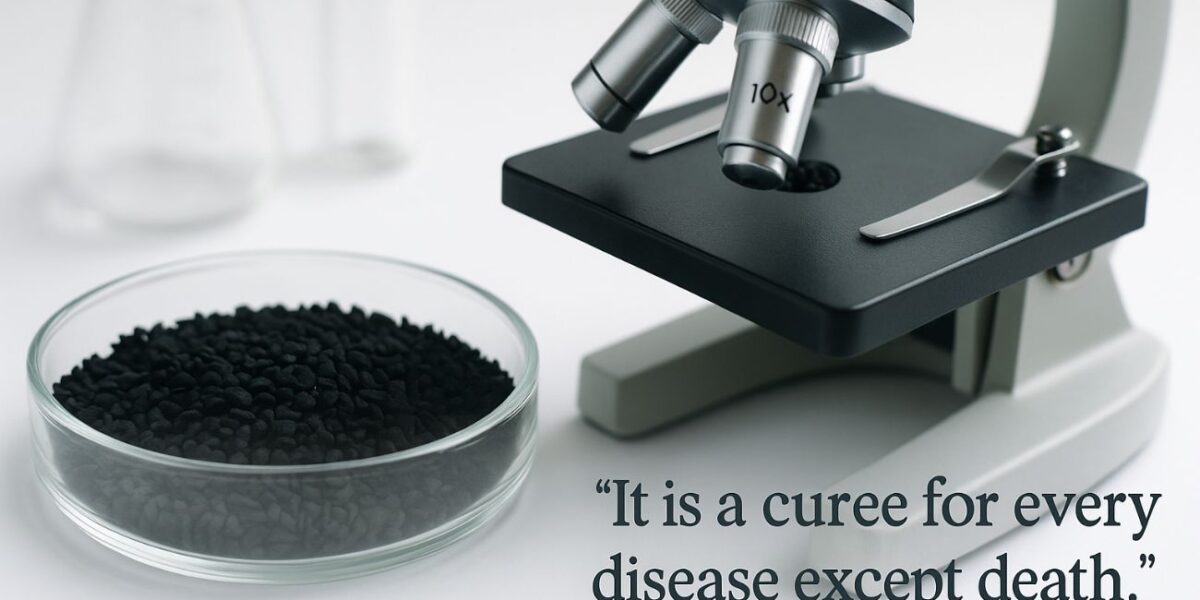
For instance, one outstanding doctor wrote a detailed study on al-ḥabbah as-sawdāʾ (black seed), about which the Prophet ﷺ said:
“It is a cure for every disease except death.”
In that book, the author described his laboratory and clinical findings confirming its benefits for several illnesses. This kind of work should be expanded — because Rasūlullāh ﷺ mentioned many such remedies that await proper scientific investigation.
Conclusion
My humble suggestion, therefore, is that a committee should be formed to research and study the fiqh and medical implications of ṭibb an-nabawī, linking it with modern science, so that Muslims may benefit from both worlds — the knowledge of revelation and the knowledge of observation.
With these submissions, I seek your permission to conclude. I pray that Allāh ﷻ unites our hearts, guides us to reform ourselves, and enables us to serve the Muslim Ummah sincerely for His pleasure.
May Allāh ﷻ bless you all.
Wa-s-salāmu ʿalaykum wa raḥmatullāhi wa barakātuh.
By Mufti Taqī ʿUthmānī
Location : United Kingdom, Preston
Presented by : Centre for Islamic Medical Ethics & Hospital Jurisprudence (CIMEHJ)
Disclaimer:
The above article has been prepared under the full oversight and approval of the respected Muftī Ṣāḥib. The author may have utilized AI assistance for the purposes of language refinement, structural clarity, and improved coherence in English. However, the religious content and conclusions reflect the Muftī’s authoritative guidance.